
Manifestation, or Just Images?
I made an image board in 2017 and I still go back to it. Not to add things, to cut them. That's the only part that tells you anything.
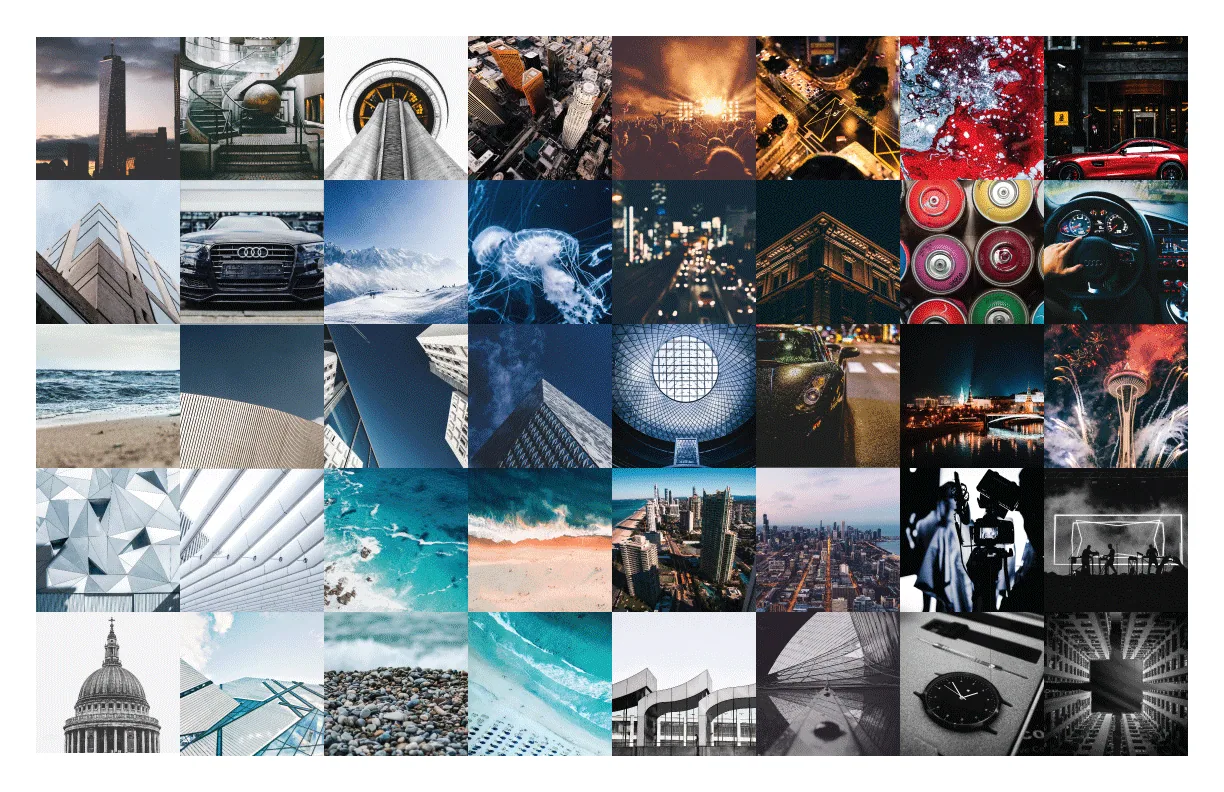
I made an image board in 2017 and I still go back to it. Not to add things. To cut them.
That's the part nobody talks about, and it turns out to be the only part that tells you anything.
It Started as Homework
I was taking architecture tech courses, surrounded by images all day. Floor plans, elevations, material samples. We had a project where we were asked to collect images that made us feel something. Nobody specified what. Just things that pulled.
So I saved them, put them in a folder, and looked at them occasionally.
I didn't call it manifestation. I didn't call it anything. It was a collection of things I liked.
Everyone already does this, by the way. Instagram saves, Pinterest boards, the screenshots folder on your phone. I'm not the first person to hoard images and I won't be the last.
What I didn't expect was what it would be like to open it years later.
Did any of it happen? Some. Not all. Some of it shifted into other shapes.
But whether I "manifested" anything turned out to be the least interesting question available. The interesting part was seeing what I thought I wanted, and noticing how much of it I still do.
What the Board Actually Does
Here's the version of the mechanism you'll hear most often: your brain has a reticular activating system that filters what you notice, so putting a goal on a board tunes the filter and you start seeing opportunities that were always there.
I like that story. I've repeated that story. It's also a pop-science flattening of what the RAS actually does, which is closer to regulating arousal and wakefulness than serving as a personal opportunity radar.
So let me claim the smaller, defensible version instead: attention is selective, what you rehearse looking for is easier to see, and externalizing something makes it harder to quietly stop caring about it.
That's less magical and it's enough.
The Research That Inconveniences Everybody
Gabriele Oettingen has spent years on this, and her finding is genuinely awkward for manifestation culture: purely positive visualization tends to decrease the effort people put in. Picturing the good outcome gives the brain enough of the feeling of having arrived that you relax. You stop pushing.
What works in her research is mental contrasting: holding the thing you want and the obstacle in the way at the same time. The tension between those two is the part that produces movement.
Which means the board on its own is decoration. The board plus an honest look at what's actually blocking you is a tool.
Manifestation culture got the order backwards. The vision alone makes you comfortable. That's the opposite of the intended effect.
The Information Is in What You Remove
So I go back to mine to cut things.
Some images just don't land anymore. Whatever I felt when I saved them has drained out. That's fine. That's the useful part. It tells you where you were versus where you are.
And then there are the ones that refuse to go. You try to remove them and something says no, this stays.
Ask what it is about that specific image, that specific idea, that still pulls after years of you changing around it. That isn't decoration anymore. That's direction, and it's the only kind that hasn't been talked into existence.
Some of what I collected in 2017 I'm still chasing. Some of it feels like a stranger saved it. Neither is good or bad. It's data about what mattered then and what matters now, and which parts held.
What I Actually Think
Most of the manifestation industry is self-deception with good graphic design. People staring at boards waiting for delivery. That isn't a strategy, it's a screensaver.
But the attention piece underneath it is real, in the modest form: you see more of what you've trained yourself to look for, and you can't be honest about a want you've never made explicit.
So the question was never whether manifestation works.
Does it still fit. Did you move toward it or away from it. Does the gap say something you'd rather not say out loud.
Some of it will be uncomfortable. That's the part doing the work.
> More from the Index
All posts →


> Get posts like this
Keep the thread going.
New pieces land here first. No schedule, no noise, just the ideas worth the room in your inbox.
- Essays on attention, craft, and building
- What I got wrong, with the receipts
- The occasional teardown of something I built
Unsubscribe anytime · No spam
.gif)
> ReturnSend
Subscribe Now.
Wake up curious. The work, the art, and the ideas underneath. Occasional, personal, and only when there's something worth sending.